Deutsch
  Русский
  Español
  Italiano
  Français
  Portuguese
  Türkçe
  Ελληνικά
  >
>
What is can bus stand for?
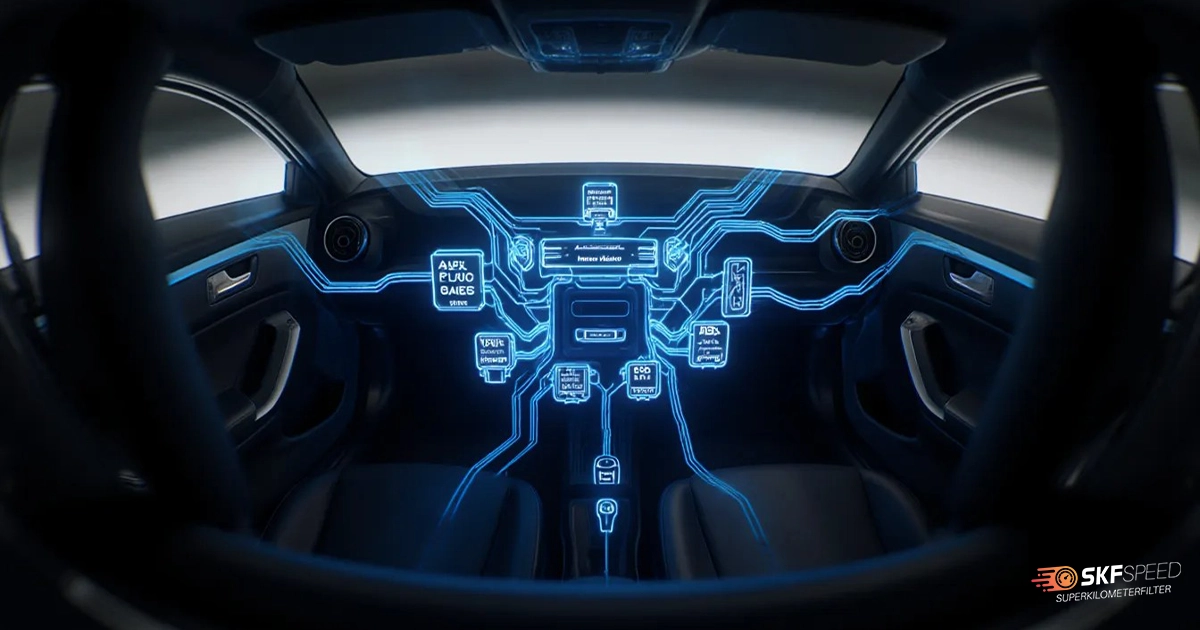
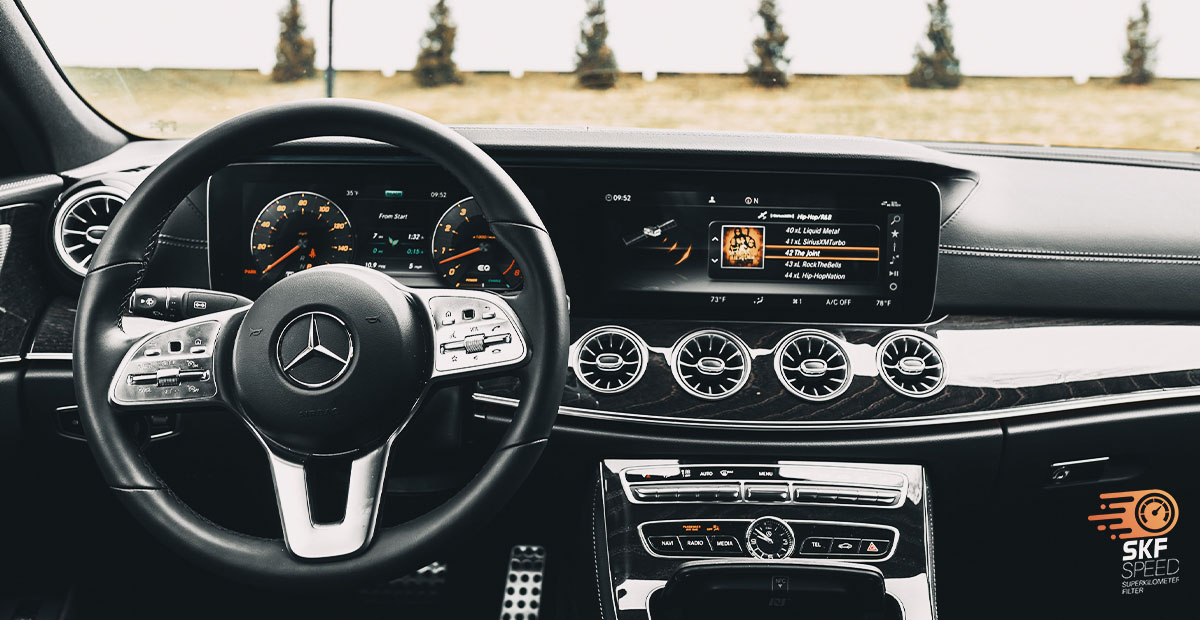
The can bus is a communication network inside modern vehicles that helps dozens of controllers, sensors, and modules transfer data down one or two wires. Such a system enables exchanging messages reliably, rather than each one needing its own dedicated cable.
The word “CAN” stands for Controller Area Network. That is why you will often find references to “The CAN bus standard”. On the other hand, the term “bus” refers to a communication pathway (shared wiring) among devices. Hence, the phrase Controller Area Network bus is a bit inconvenient, that’s why we write can-bus.
Historical Background of can bus system
First, let’s look at how the story goes: In the mid-1980s, Robert Bosch developed the CAN protocol in order to reduce the complexity and cost of wiring in automobiles. Before CAN, a car might have had point-to-point wiring between each sensor and each controller. Imagine thousands of cables entangled with each other. This complex wiring created a nightmare, adding extra weight, increased costs, and potential failure points. Fortunately, the can-bus standard was introduced around 1986 and gradually integrated into many vehicles.
In modern vehicles, you’ll find dozens of ECUs (Electronic Control Units). One is responsible for the engine, another for the transmission, ABS/ESC system, airbags, sensors, etc. On many vehicles, the can bus is the backbone of the communication system between them. According to multiple studies, a modern vehicle can have up to 70 ECUs talking over can-bus protocols.
So when you hear CAN technology, just think of a shared vehicle communications network connecting multiple modules (controllers) in a vehicle. It enables them to talk, coordinate, and respond to each other faster in real time.
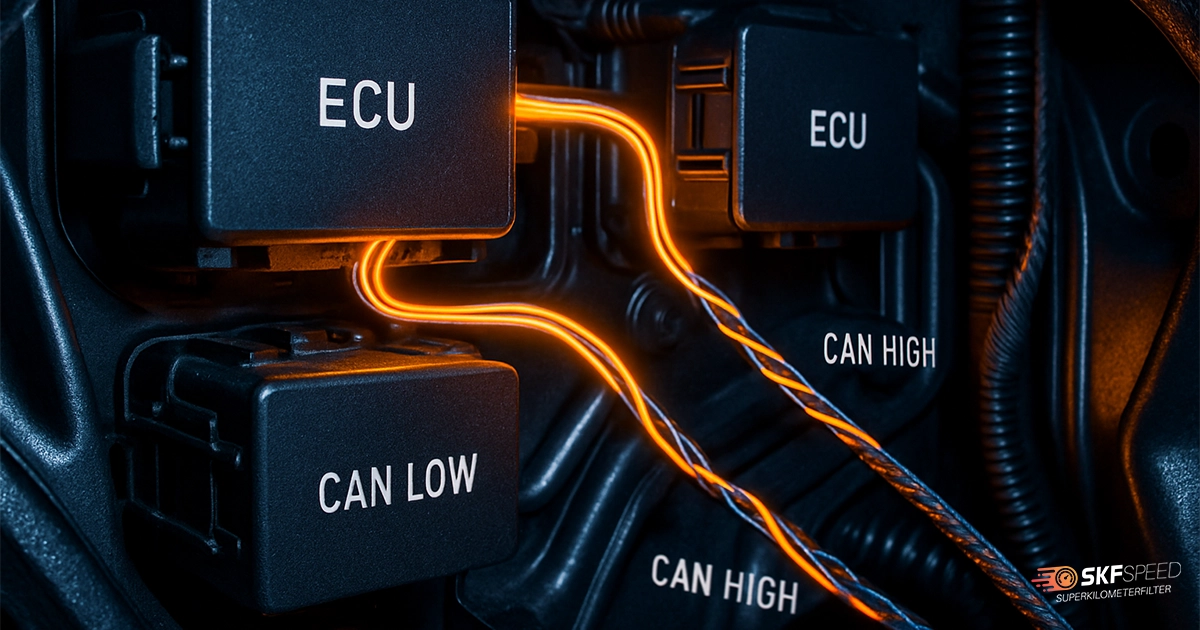
The Role of can bus in Vehicles
Modern cars contain countless systems: engine control, transmission, safety, suspension, infotainment, sensors, and actuators. All these need to share data fast and reliably. The can-bus network is often the common highway linking many of these modules.
For example:
- Engine Control Unit sends data such as RPM, temperature, and throttle position over the bus.
- Transmission module sends gear status and shift times.
- ABS/ESC (braking/stability) system monitors speed sensors on each wheel and sends commands.
- Body-Control Module sends door open/close, lighting status.
- Telematics/diagnostics units can tap into the bus for retrieving data or flashing the ECUs.
Because the wiring is shared, there’s reduced complexity, less weight, fewer potential failure points, and easier maintenance. Many service tools connect to the diagnostic port (OBD-II) and tap into the can bus or a related vehicle network to monitor system behaviour, perform fault diagnosis or ECU programming.
How Does can bus Work?
Wiring and physical layer
Imagine a vehicle where instead of 50 separate wires between 50 systems, you have a central two-wire twisted cable. That’s essentially how a can-bus network is set up. The wiring is cost-effective and reduces weight. The two wires carry a differential signal so that noise cancels out. This is ideal for a vehicle with significant electrical interference.
Messages and Prioritisation
In the network, each node (an ECU or sensor) can send and receive messages. When a node wants to “talk”, it transmits a data frame on the bus, and all other nodes “hear” it. They check the identifier and decide whether it’s relevant to them, and act accordingly.
In case two nodes try to send at the same time, the message with the lower identifier wins and continues, while the other node backs off and retries later. This ensures the more critical message gets through first. For instance, an ABS or air-bag message might have higher priority than, say, a window-switch sensor.
Message frame structure
A standard CAN message (often called a CAN data frame) includes fields such as the identifier. The identifier not only tells what the message is about but also its priority on the bus.
Real-world example
Let’s say you are driving your vehicle, and you press the brake pedal. The brake pedal sensor sends a message on the can bus. That message travels over the shared wiring. Thanks to the can-bus, you didn’t need a separate hard-wired link to each of those. The bus message does the job. Seen another way, the can bus is like the nervous system of a car: sensors and actuators are nodes, and the wiring is the nerve bundle.
Practical data & limits
Classic CAN 2.0 supports data rates up to around 1 Mbps. But today’s vehicles demand much more data (radar sensors, cameras, high-speed networks). So, while CAN is still widely used, some higher-bandwidth systems are being layered on top of it.
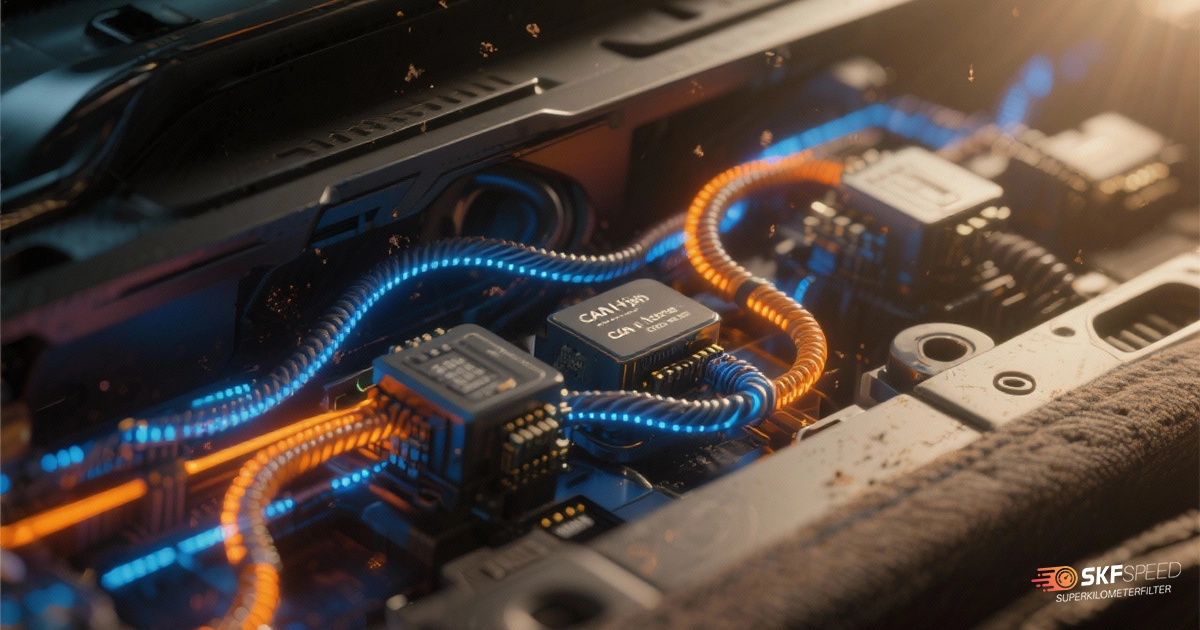
How do Mileage Blockers work with CAN bus?
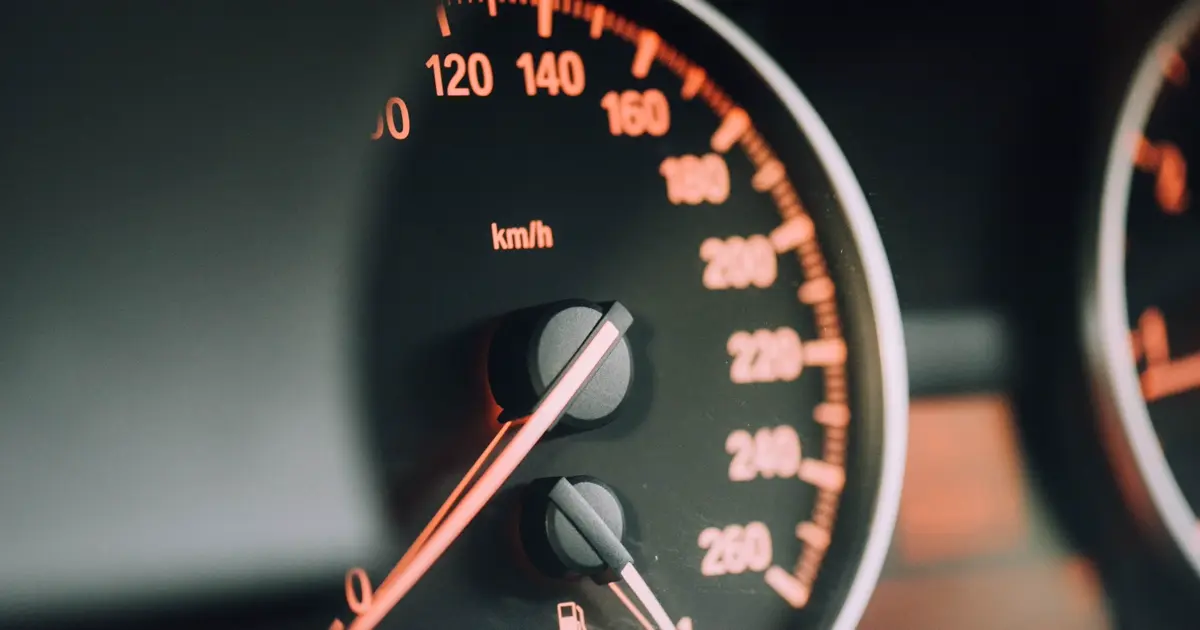
A Mileage Blocker is a device that intercepts the mileage data logged within the vehicle’s network. The idea is that the odometer no longer stores the distance in the ECU/EEPROM memory. Hence, the original mileage remains unchanged despite driving. These devices often claim compatibility with vehicles that use can-bus or even FlexRay networks.
How mileage blocker works:
The vehicle uses the can bus network to send speed, wheel rpm, vehicle-distance-travelled, and other data. Modules listen and store the data for things like service intervals, warranty claims, and diagnostics.
The mileage-blocker device taps into the bus (or in line between modules). It filters and alters the messages that carry the mileage data so that the modules don’t update their stored mileage. Consequently, the new mileage won’t appear on the dashboard.
Because many ECUs maintain independent logs of total mileage, the blocker must intercept and modify messages across multiple modules. In short, the mileage blocker uses the network can-bus as the path to intervene in the data flow.
Is a mileage blocker undetectable?
The mileage blocker prevents the vehicle from storing mileage information in storage units. Therefore, the data is completely untraceable and undetectable. Even if someone uses scanner tools, the information still won’t be visible.
The mileage blocker has other advantages:
- It comes with a mobile application that enables you to control the device from your phone.
- Easy DIY installation instructions.
- The blocker has various modes to choose from. You can select what suits you most.
- The device is made of premium quality materials.
- Flawless working in harsh weather conditions.
- The SKF mileage blocker is available online, and you can purchase it anytime. Remember that this device is only for car testing purposes under a controlled environment.
Advantages and Limitations of can bus
Advantages:
- It is cost-effective. One shared bus, reduced weight, less complexity and cost compared to point-to-point wiring.
- Improved Reliability. CAN bus offers built-in error detection, arbitration, and fault confinement. Consequently, in automotive harsh electrical environments, it performs well.
- Real-time communication with prioritisation. It ensures that critical messages go first, less-critical messages later. This is vital for safety systems.
- Wide adoption and integration. Because it has been used for decades, many diagnostic tools and modules make integration easier.
Limitations:
- Bandwidth: Classic can bus networks can only handle speeds up to 1 Mbps, which was fine for older cars. However, today’s vehicles with cameras, advanced driver-assistance systems (ADAS), radar, and vehicle-to-vehicle communication demand much higher bandwidth to keep everything running smoothly.
- Security: By design, the protocol doesn’t include encryption, authentication, or a way to verify where messages come from. As a result, it’s vulnerable to attacks such as spoofing, message injection, or denial-of-service.
- Scalability and future demands: As vehicles become “software-defined vehicles” (SDV) with centralised computing and high-data links. Therefore, relying only on can-bus may not suffice.
Is can bus Still Relevant in the Next-Gen Vehicle?
As vehicles evolve more ADAS, autonomous features, connected services, OTA updates, and huge data flows the role of can bus is being reconsidered. But relevance remains for many systems.
Why it remains relevant
- Many existing vehicle platforms still use CAN bus for legacy systems (engine, transmission, body control). This means skills, tooling and components exist and are mature.
- For non-highbandwidth subsystems (window motors, seat adjusters, sensors), CAN is cost-effective and reliable.
- Integrating new protocols can be expensive; manufacturers often keep CAN for non-critical systems while layering in high-speed protocols for data-intensive parts.
Why it’s being challenged
- High-bandwidth systems (LiDAR, cameras, radar, V2X) produce large amounts of data; CAN’s bandwidth is insufficient.
- Latency and determinism demands: Autonomous functions require ultra-low latency, guaranteed timing; CAN’s arbitration model doesn’t always meet those needs.
- Security demands: CAN lacks built-in encryption/authentication; as vehicles become more connected, this is a weakness.
- Software-defined vehicle architectures expect high data-rate backbones (Ethernet, high-speed buses) and fewer distributed ECUs.
The Power and Advantages of the can Bus System
The can-bus system transformed the way vehicles communicate by replacing complex wiring with a single, streamlined communication line. Such a central network enables different electronic control units to share data quickly and accurately. Thanks to this, modern vehicles can handle advanced features such as adaptive cruise control, real-time diagnostics, and optimised fuel management with high precision. One of the key benefits of can bus technology is its reliability. Even if one device fails, the rest of the system continues to run smoothly. It also makes maintenance easier by providing straightforward access to diagnostic information, which helps cut down on repair time and costs.
CAN Bus isn’t limited to cars anymore. Its efficiency and robustness have made it a standard in industrial machinery, medical devices, and even aircraft. CAN Bus helps make technology smarter, safer, and more efficient across a wide range of industries.
Takeaway
The can bus system remains a cornerstone of modern vehicle communication, enabling reliable, real-time data exchange between multiple electronic modules. It is simple, efficient, and robust, which makes it indispensable not only in cars but across different industries. The CAN Bus technology continues to offer cost-effective, dependable solutions for many vehicle systems.

By Maria Laskowski





Service center
CUSTOMER CENTER
Here you will find all the details about our company
Shipping and return
Here you will find shipping and return related information
Technical Support
Here you will find information on all technical questions
Installation Support
Here you will find helpful information about installation