Deutsch
  Русский
  Español
  Italiano
  Français
  Portuguese
  Türkçe
  Ελληνικά
  >
>
Exploring Per-mile taxes from California Road Charge Program
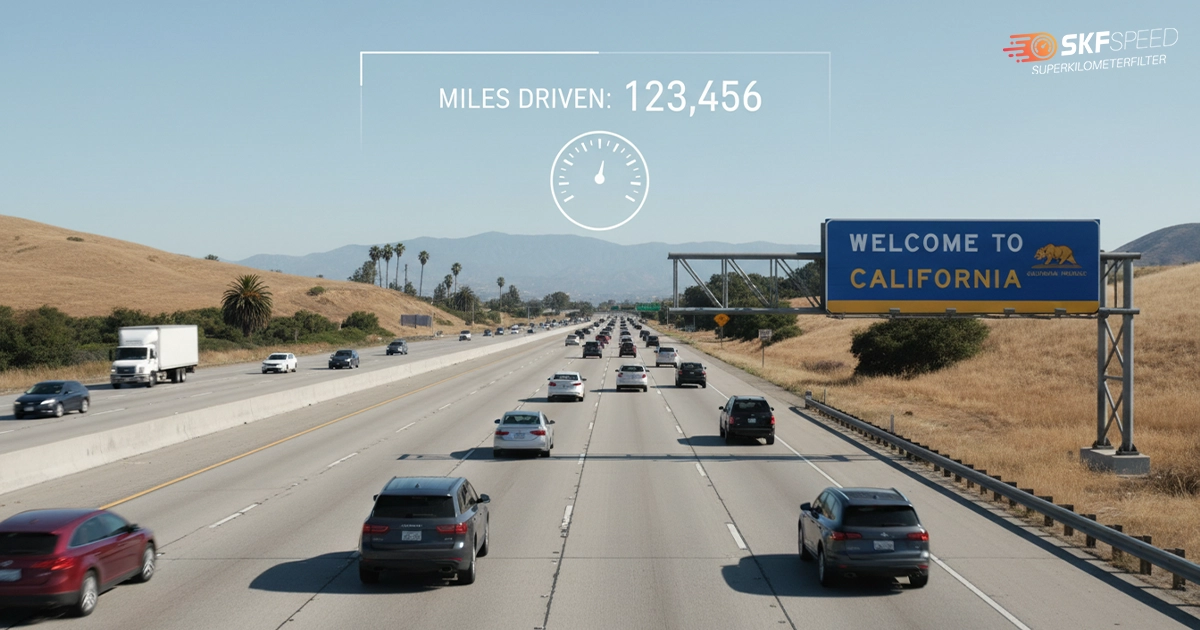
California road charge is becoming one of the most talked about transportation policies in the state because it directly affects how drivers will pay for roads in the future. Instead of relying mainly on fuel taxes, California is exploring a system where drivers pay based on how much they actually drive.
At first glance, this idea sounds complicated. In reality, it is a response to very simple math. California roads need money. Traditional funding is shrinking. More cars now use less gas, and more electric vehicles pay almost nothing into the system.
In this blog, we will discuss what is changing, why it matters, how it may work, and what it could realistically cost you as a driver.
Why California mile tax became a serious proposal
The discussion around California mile tax started when transportation experts noticed a long term trend that could no longer be ignored. Gas tax revenue has been declining year after year, even though traffic volume remains high.
Here is why that happens.
- Fuel efficient automobiles use less gas per mile.
- EV adoption grows rapidly across California.
- Remote work reduces commuting but not road wear.
- Maintenance costs increase with inflation and climate damage.
According to state transportation data, California collects billions less in fuel tax today compared to projections made a decade ago. At the same time, the average vehicle still travels roughly 12,000 to 13,000 miles per year.
A mileage based system directly connects road funding to road usage. That is the logic behind it. Instead of paying indirectly at the pump, drivers contribute based on mileage, regardless of engine type.
How california road charge works in practice
The idea of the California road charge becomes much clearer when you analyse real pilot programs. These pilots tested different methods for measuring mileage. The main goal was to focus on miles while avoiding privacy intrusion. Drivers were allowed to choose from their preferred method.
- Submitting odometer photo annually.
- Plug in devices that check distance.
- Mobile apps that calculate miles without storing routes.
- Flat rate estimates for low-mileage vehicles.
It’s important to note that drivers did not have to share where they drove. The system focused on distance, not location.
The average tested rate hovered around 30 cents per mile before fuel tax credits.
California mile tax VS the current system
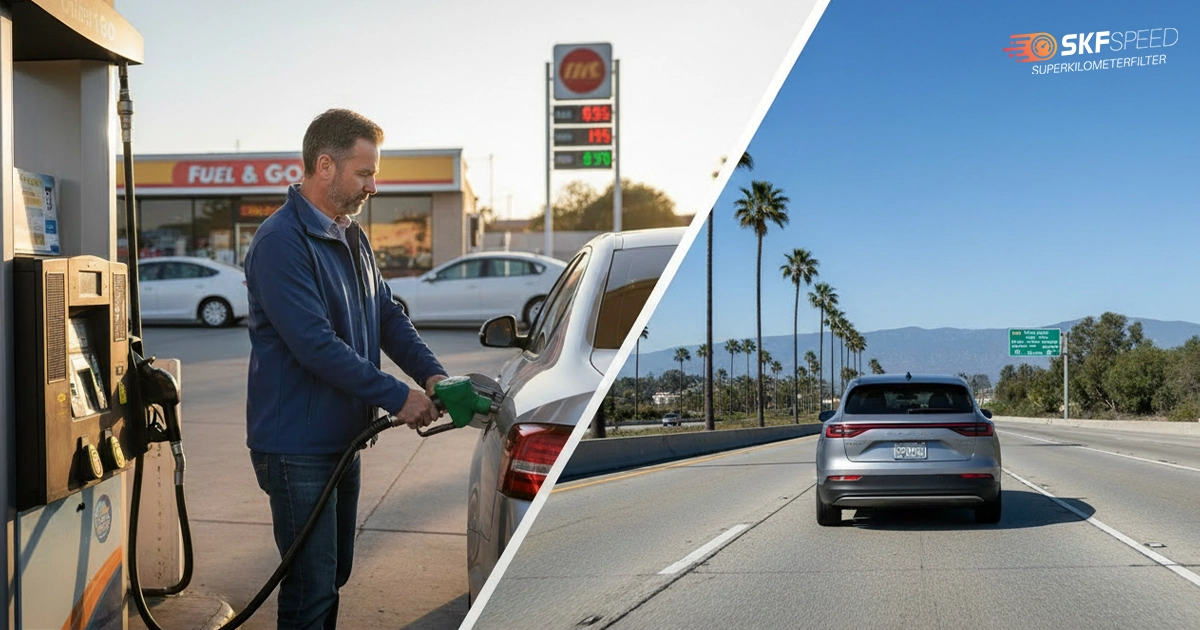
When you compare California mile tax to the gas tax, the biggest difference is transparency. You can’t see gas taxes in fuel prices. This makes them easy to ignore and almost impossible to track.
As for a mileage-based system, it shows you exactly what you pay and why. For example, if you have a fuel-efficient vehicle and drive 12,000 miles per year, you may currently pay relatively little in gas tax
On the other hand, a person who drives an electric automobile and travels long distances currently contributes almost nothing to road funding. A mileage-based model corrects exactly that imbalance. From a fairness standpoint, you both use the same roads and cause similar wear. Hence, both contribute based on distance traveled rather than energy source.
How much drivers may pay under the system
Cost is usually the first thing people worry about when they hear about a mileage based road charge, and it absolutely makes sense. Numbers help turn fear into understanding.
On average, a California driver travels about 13,000 miles per year. Pilot programs have tested rates around 30 cents per mile. On paper, that equals around $3,900 per year before accounting for already paid gas taxes. After accounting for fuel tax credits, most drivers’ annual net cost will be between $1,900 and $2,400.
Interestingly, that is very close to what many drivers already pay indirectly at the pump, it just becomes more transparent under the mileage system.
Who pays more, who pays less, and why?
Who ends up paying more depends mostly on how much and how often you drive. High-mileage commuters, people who travel long distances daily for work, and owners of heavy autos that cause more wear on the roads are likely to see a slightly higher contribution under this system. Also, EV owners and other electric vehicles, who currently pay very little in gas taxes, would also pay their fair share.
However, not everyone will pay more. People who live in urban areas and rely on public transportation may find their costs stay the same or even decrease slightly. The system naturally encourages you to become more efficient.
If you drive less, your bill decreases accordingly. Unlike some tax changes, this approach does not restrict freedom or prevent you from using your car. It simply aligns your contribution with your use of the roads.
Overall, the system is designed to be fair, predictable, and understandable. Instead of guessing how much you are contributing at the gas pump, you will know exactly what you pay, why you pay it, and how your driving habits affect your bill. It makes road funding transparent and gives you more control over your transportation costs.
Real cost examples using data
Let’s use numbers to put things in perspective. The average California driver travels around 13,000 miles a year. With approximately 30 cents per mile, the total cost estimates $3,900. Owners of gas-powered cars receive fuel tax credits, which typically reduce their tax bill by $1,500 to $2,000. That means the net cost ends up close to what most drivers already pay through gas taxes.
The difference is control. If you reduce how much you drive, your cost drops immediately. The system rewards efficiency and planning rather than punishing vehicle type.
Will California mile tax replace the gas tax completely?
Most analysts agree that California mile tax will not replace the gas tax. That’s why a hybrid system is more realistic. In such a scenario, gas taxes may remain in place while mileage charges will slowly expand. As the share of electric vehicles grows, the balance may shift further toward distance-based funding. Full replacement will probably take many years and can only happen once the system proves its reliability, fairness, and ease of use.

Privacy and trust concerns
Privacy is a major concern for everyone when we discuss mileage-based systems. To increase their trust, during pilot programs, drivers could choose non-digital reporting methods. No data was shared with law enforcement or the IRS, and no information was collected about your routes, destinations, or travel times. Furthermore, there was no tracking of when you pass a location or use a specific exit.
The main idea was to show you that the focus stayed simply on distance and billing accuracy. This approach helped build trust and demonstrated that a mileage system is not for surveillance.
How Does a Mileage Blocker Help Testers?
Mileage blocker is a compact device that helps testers stop mileage recording. This gives them the opportunity to review performance and all necessary data for your vehicle without recording extra miles. The key advantage of the SKF mileage blocker is that it doesn’t save information to the ECUs. Therefore, the data is fully untraceable.
What are the advantages of the mileage blocker?
- The device is untraceable.
- Has easy installation instructions.
- Uses a mobile app.
- The module has different modes.
- It consists of premium quality components.
- High performance in harsh weather conditions.
Remember that the mileage blocker is designed only for car testing and tuning. Only professional testers should use it under controlled environment. If you decide to buy the SKF mileage blocker, always check the local guidelines. For further details, contact the support team.
Takeaway
The California road charge is a new initiative that will charge drivers based on the rate rather than fuel consumption. It aims to replace revenue from the outdated gas tax as cars have become more fuel-efficient and electric. This system will focus on fairness and transparency. If you drive less and use more public transport, you can significantly save on your costs.

By Maria Laskowski








Service center
CUSTOMER CENTER
Here you will find all the details about our company
Shipping and return
Here you will find shipping and return related information
Technical Support
Here you will find information on all technical questions
Installation Support
Here you will find helpful information about installation