Deutsch
  Русский
  Español
  Italiano
  Français
  Portuguese
  Türkçe
  Ελληνικά
  >
>
How mileage blocker from Super Kilometer Filter is produced and developed for modern cars?
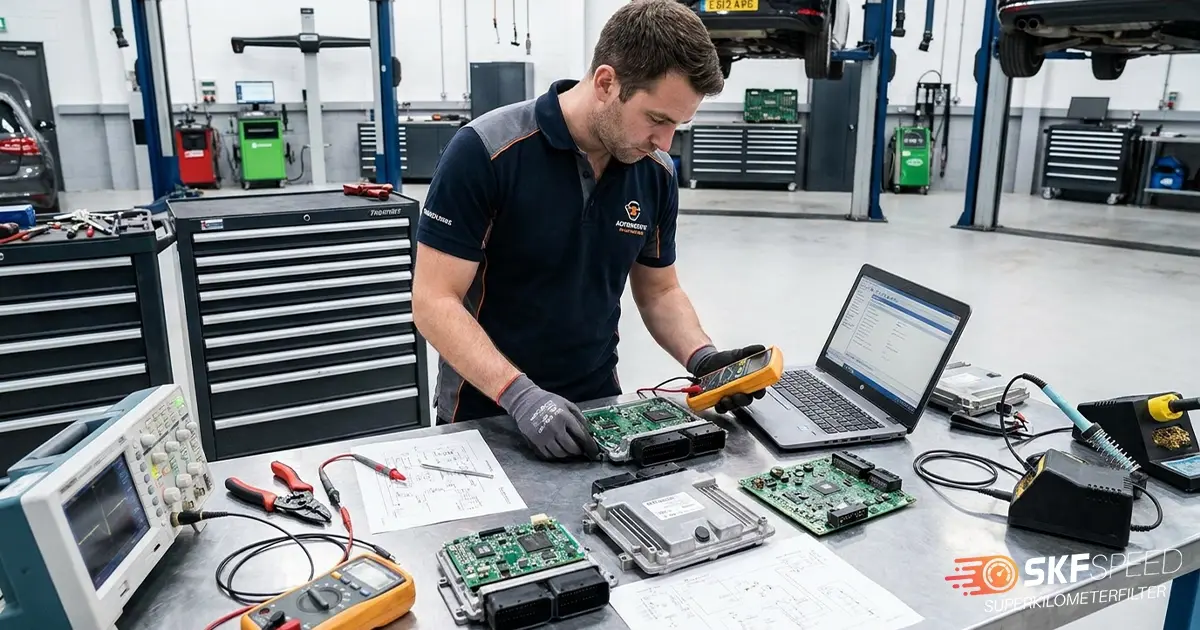
A Super Kilometer Filter mileage blocker is not simply a small electronic box placed behind a dashboard. Its development starts with research into the communication system of a specific vehicle. Engineers need to understand how the car’s electronic control units exchange power, data and commands before they can design a compatible module. Super Kilometer Filter says it has worked with CAN Bus and FlexRay systems for more than 10 years and currently develops modules for almost 50 vehicle brands and around 250 models. The company says each module receives separately developed software and is individually tested before shipping.
How to install a super kilometer filter in a vehicle?
The installation itself is usually much easier than the development behind the device. The mileage blocker is installed between the cable coming from the vehicle electronics and the instrument cluster. Instead of disconnecting the dashboard completely, the module remains in the communication path and manages the relevant signals. That difference is important.
What actually reaches the dashboard?
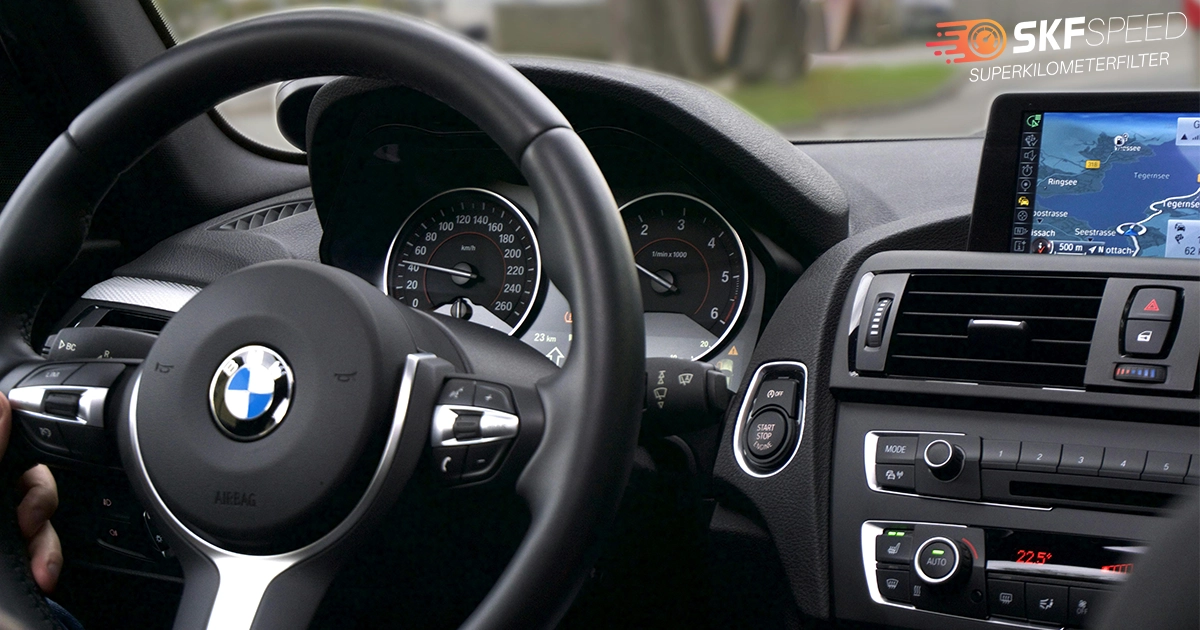
A modern car does not use the dashboard only as a screen. The instrument cluster receives information from the vehicle’s electronic systems and converts it into information that the driver can understand.
A simplified example looks like this.
| Vehicle information | Where it comes from | What the dashboard uses it for |
| Wheel speed | Wheel speed sensors and vehicle control systems | Speed and distance calculations |
| Fuel level | Fuel level sensor | Fuel gauge and fuel economy calculations |
| Engine information | Engine control system | Driver information and warnings |
| Vehicle faults | Different electronic control units | Warning messages |
| Driver commands | Switches and controls | Lights and other vehicle functions |
What is the role of Electronic Control Units?
ECUs are essentially dedicated computers that control different functions of a vehicle. They process information and communicate with other electronic systems. Depending on the vehicle, dozens of control units can be involved in the overall electronic architecture.
The important point for this article is that the dashboard does not generate all of its information by itself. It receives information from the vehicle’s electronic network.
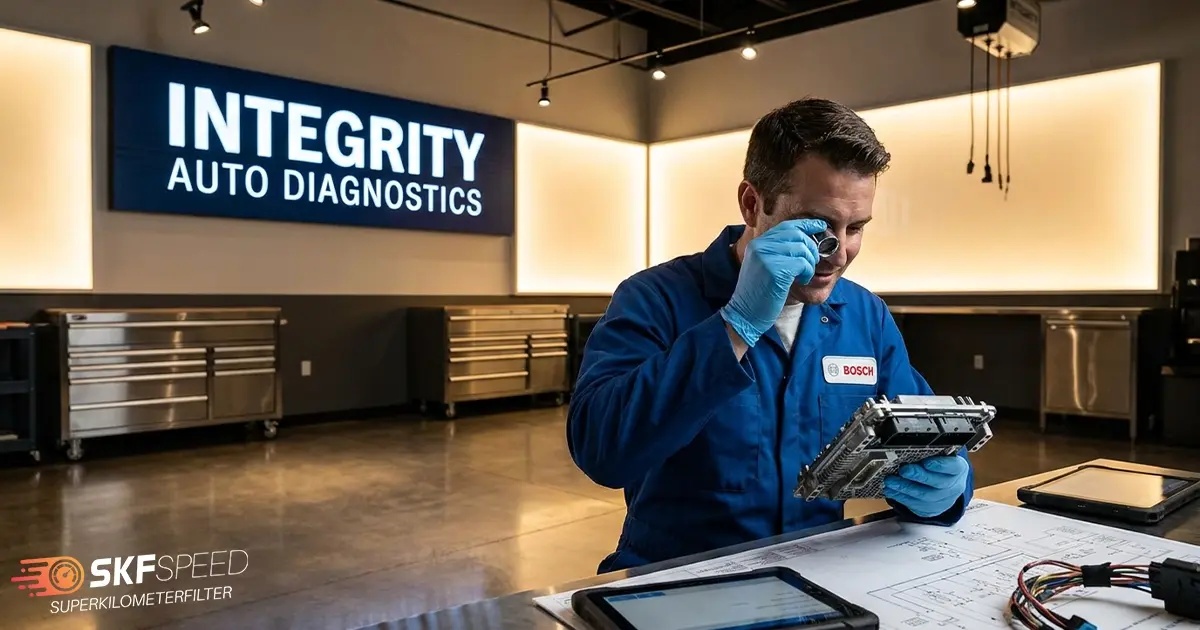
What are ECUs responsible for?
It helps to divide the communication into three simple categories.
1. Electricity
Electronic components need power to operate. The instrument cluster needs electricity to illuminate its display and run its electronics. A mileage blocker also needs its own power because the module contains electronic processing hardware.
2. Data
The vehicle constantly exchanges information between electronic systems. Fuel level, wheel speed and many other measurements can become part of this communication.
3. Commands
Driver actions can also result in electronic commands. When a driver operates the indicator lever, for example, the vehicle’s electronic systems receive that input and activate the relevant function.
This means the cable connected to an instrument cluster can carry much more than information about mileage. It can carry the electrical supply and communication required for several dashboard functions.
What happens if you simply unplug the dashboard cable?
The simplest way to understand the need for a mileage blocker is to imagine disconnecting the dashboard completely.
The instrument cluster would lose its electrical supply and communication with the vehicle. The result would not be a normal functioning dashboard with only mileage removed.
Instead, important functions could stop operating. That is why the mileage blocker works as an intermediary rather than simply acting as an on and off switch.
How does the mileage blocker sit between the vehicle and dashboard?
The customer disconnects the original cable from the instrument cluster and connects the mileage blocker between the cable and the dashboard.
The basic path looks like this:
Vehicle ECU → Mileage Blocker Control Unit → Dashboard
The incoming side receives the vehicle communication. The control unit processes the relevant signals. The outgoing side then connects to the instrument cluster.
This is the key idea behind the device. The module does not need to remove power from the dashboard. It needs to manage the communication while allowing the instrument cluster to continue functioning.
What is inside the six core cable?
Inside the six-core cable, each connection has a different role.
The wire colors shown in a technical illustration should not be interpreted as universal automotive wiring colors. Actual vehicle wiring can use different colors depending on the manufacturer and model.
The functional arrangement is more important than the color.
| Connection | Function |
| Positive power | Supplies electrical power |
| Negative power | Completes the power circuit |
| CAN High | CAN communication line |
| CAN Low | CAN communication line |
| ECU side | Incoming vehicle communication |
| Dashboard side | Processed communication toward the cluster |
The power lines supply the control unit and maintain the electrical requirements of the dashboard.
How mileage blocker from Super Kilometer Filter is produced?
The production process begins long before the first physical module is assembled.
Super Kilometer Filter says its team has more than a decade of experience with CAN Bus and FlexRay systems. It also states that it develops the software separately for each module and produces its modules itself rather than acting only as a reseller.
The company currently lists products covering almost 50 brands and approximately 250 models. It also says that several different modules can be developed for the same vehicle when different functions or cable lengths are required.
That gives us a useful picture of the development process.
Step 1. Research and development
The first stage is understanding the vehicle. Engineers need to identify how the relevant electronic systems communicate and determine how the instrument cluster receives the information it needs.
This particular stage can take months or, for more complicated applications, considerably longer. The reason is very simple. Modern vehicles are not built around one universal electronic architecture. And a solution developed for one vehicle cannot automatically be assumed to work correctly on another.
Step 2. Hardware development
Once the communication requirements are understood, the appropriate hardware can be developed.
This stage includes the control electronics, processor, connectors, wiring, and other components required for the application. Super Kilometer Filter uses original plug connectors and high-quality hardware.
The connector is not just a cosmetic detail. A vehicle-specific plug allows the module to connect to the intended factory wiring without turning the installation into a custom wiring project.
Step 3. Software development
The processor inside the control unit needs software. This is arguably one of the most important parts of the product.
The software determines how the module interprets and handles the communication it receives from the vehicle. Super Kilometer Filter develops and programs software separately for each module. That explains why vehicle compatibility needs to be checked carefully.
A mileage blocker for one vehicle should not automatically be assumed to be suitable for another vehicle simply because both cars use CAN Bus.
Step 4. Vehicle testing
The next stage is testing. A module can power up correctly and still have a communication problem. Or there might be some unexpected malfunctions. For that reason, testing is performed for all the finished products.
Super Kilometer Filter says that it checks each product separately before shipping and continuously works on improving its modules.
Step 5. Updates and compatibility improvements
The development does not necessarily stop when the module is sold. Vehicle manufacturers regularly introduce new software and electronic configurations. Why is this important? If a manufacturer’s update changes something relevant to vehicle communication, the third-party module may also need development work.
This is exactly what makes a difference when a manufacturer controls both hardware and software.
Why should mileage blocker quality matter?
The answer becomes clearer when you look at how much information a vehicle’s electronic network can carry.
The dashboard is not an isolated display. It depends on communication with the rest of the vehicle. A poor connection could therefore create problems that have nothing to do with the mileage function itself.
A properly developed solution needs to account for the electrical supply, communication lines, processor, software, and physical connections. If one component is not working properly, the whole process collapses. It’s crucial to make sure that every step of the process is flawless and functional. That is why the production process matters.
What is the intended use of a mileage blocker?
SKF mileage blockers are produced and sold only for legitimate vehicle testing. They should not be used to hide a vehicle’s actual mileage when selling or transferring a car.
There is a clear difference between a test vehicle repeatedly running on a dyno and someone attempting to make a used car appear less driven than it actually is.
Moreover, NHTSA specifically warns consumers about false odometer readings and recommends comparing the odometer with maintenance records, inspection records, tire wear, and vehicle history.
That is also why the use of a mileage blocker should remain within an appropriate testing environment. Remember to always follow laws and local guidelines, and never use the device unethically.
Takeaway
How mileage blocker from Super Kilometer Filter is produced starts with thorough vehicle research, followed by hardware and software development, and multiple testing before appearing on sale. The module connects the car and dashboard through dedicated power and CAN communication lines. Super Kilometer Filter boasts over 10 years of CAN Bus and FlexRay experience, which proves customer trust over the years, a professional approach, and a standard that the company has set over a decade. These mileage blockers are designed strictly for legitimate dyno and performance testing only.

By Maria Laskowski





Service center
CUSTOMER CENTER
Here you will find all the details about our company
Shipping and return
Here you will find shipping and return related information
Technical Support
Here you will find information on all technical questions
Installation Support
Here you will find helpful information about installation