>
>
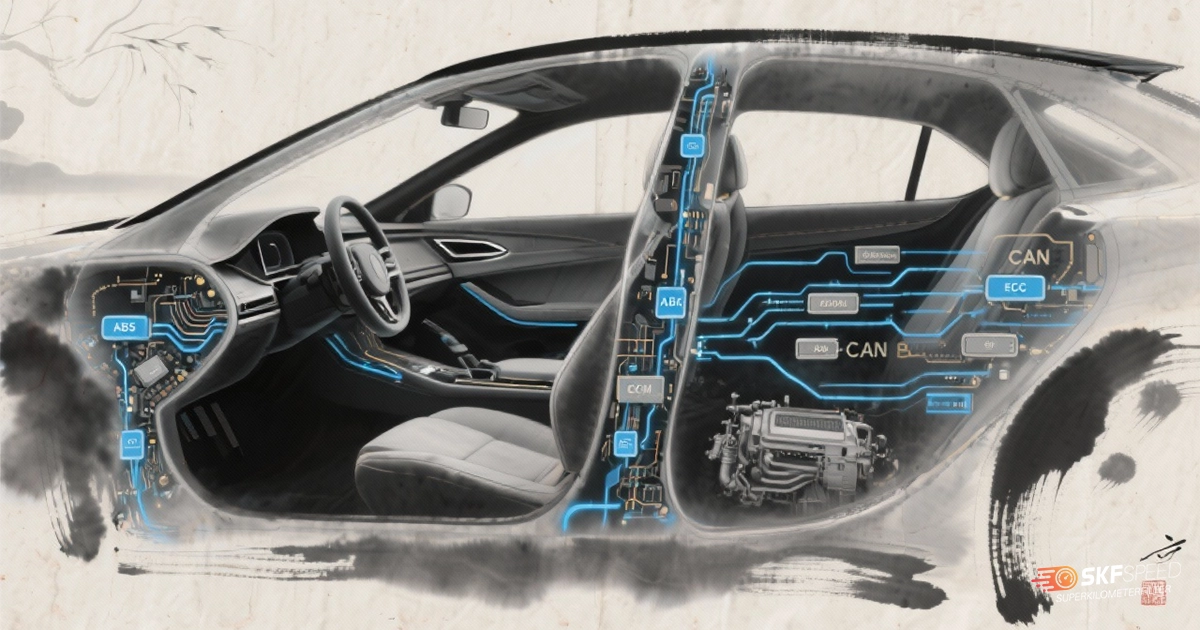
Ever wondered how modern cars got so smart? Features like adaptive cruise control, automatic headlights, and real-time diagnostics aren’t magic. They are powered by CAN Bus technology. But what is this technology? CAN Bus technology is a system that allows all of a vehicle’s electronic components to communicate with one another. Hence, instead of each part having its own independent wiring, they all share the same communication network.
Thanks to the CAN bus system, all the parts from the brakes to the air conditioning are in sync. In this blog, we will discuss how this technology actually works, why it’s so important, and the challenges that may arise.
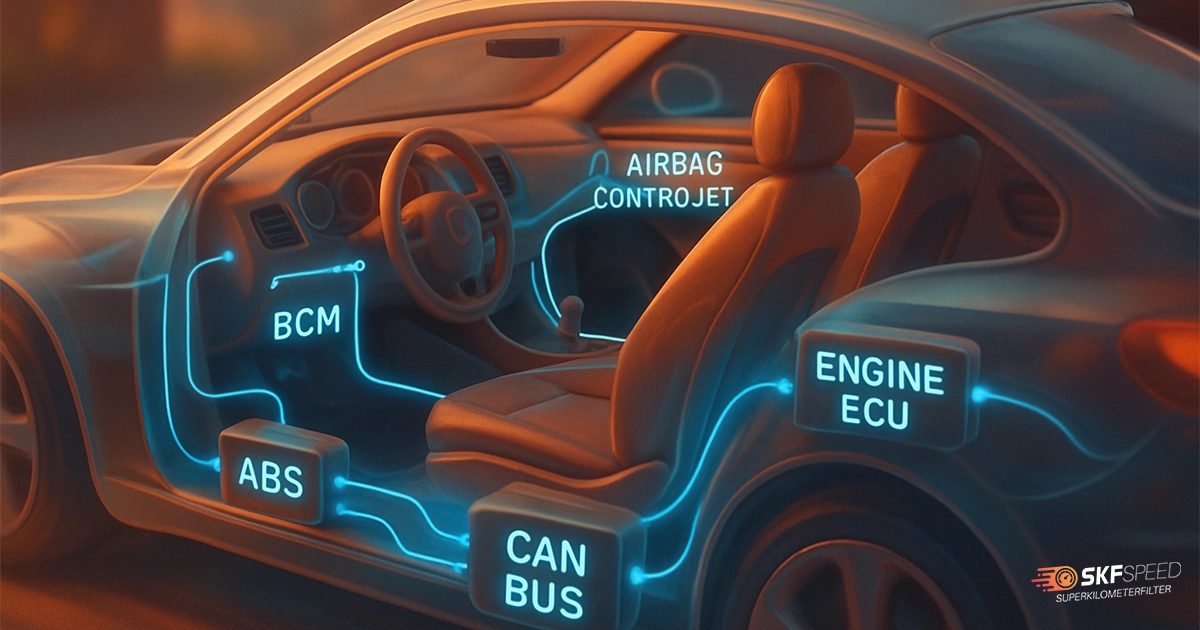
CAN Bus technology stands for Controller Area Network. It was originally developed by Bosch in the 1980s. At that time, vehicles were starting to use more and more electronic control units (ECUs), which are tiny computers responsible for handling specific tasks.
Before CAN Bus, these ECUs had to be connected with hundreds of individual wires. Of course, it created a messy, heavy, and error-prone system. To fix the issue, Bosch’s solution was innovative. Instead of giving each ECU its own wiring path, they created a network that allows all ECUs to communicate through a shared line.
You can think of it as a group chat for your car’s systems. Instead of each component calling others separately, everyone joins the same chat room and communicates efficiently. It made the whole system much faster and less prone to damage.
The year 1991 was a watershed in the development of technology. Mercedes-Benz introduced the first passenger car using CAN Bus technology. Since then, it has set a standard in the automobile industry. According to studies, over 90% of new vehicles today rely on CAN Bus or its advanced variations.
Furthermore, each car now has around 100 ECUs. CAN Bus allows seamless data sharing between them, so all commands are executed instantly. Without this innovation, modern systems like ABS brakes, airbag sensors, and automatic transmissions simply couldn’t operate together in real time.
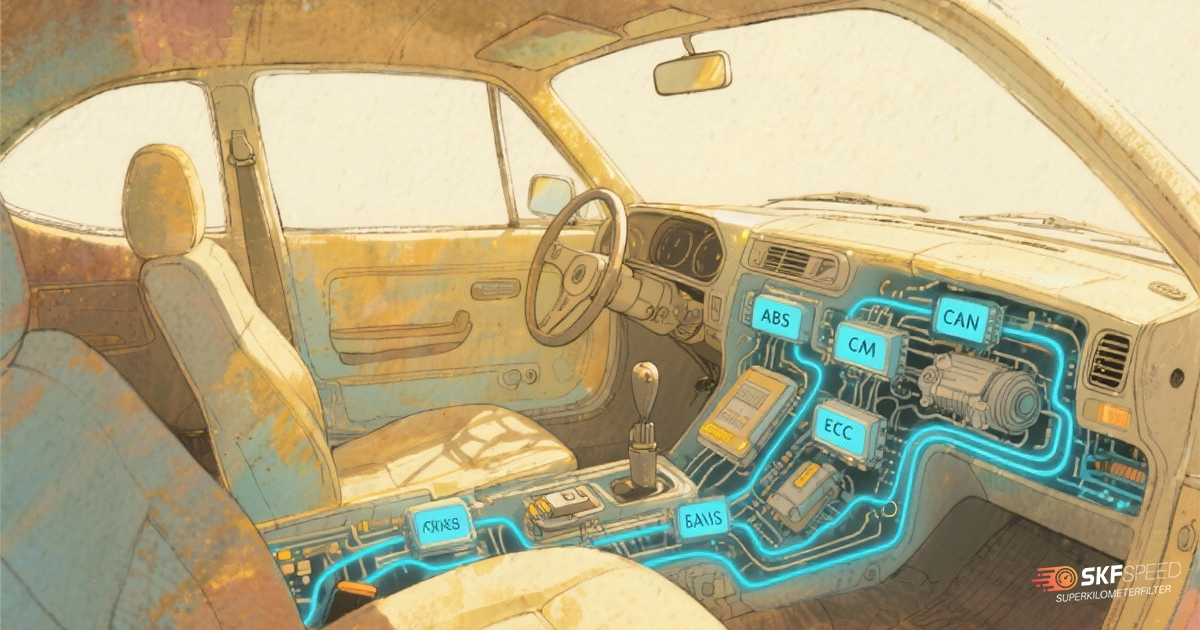
A bus is essential for almost everything that happens in your car. But let’s discuss it by real-world examples:
The major advantage of this system is instant communication between the systems. Whenever you hit the brake pedal, your car’s brake control ECU sends an instant message over the CAN Bus network to other systems.
Do you know how mechanics can just plug in a small device in your vehicle and instantly see what’s wrong? That’s all thanks to CAN Bus technology. As it connects all your car’s systems through a single data port, it enables the device to diagnose issues in minutes. Therefore, whether it’s the engine, airbags, or any small issues, everything will be reported through the CAN bus system.
Back in the 1980s, luxury cars were packed with more than two miles of wiring. Imagine so many entangled cables within one vehicle, and if one of them gets damaged, everything malfunctions. Today, thanks to CAN Bus technology, modern vehicles use about 30% less, which not only cuts costs and improves fuel efficiency but also reduces the risk of failure.
Safety features like ESC and Adaptive Cruise Control work seamlessly thanks to CAN Bus technology. CAN BUS system makes it possible to communicate between various sensors and control without losing any time. For example, if your car’s radar detects traffic slowing down ahead, it signals the engine and brakes to reduce speed. Hence, even when you might think nothing is happening inside your automobile, in practice, many operations are going on automatically behind the scenes.
A CAN Bus usually consists of two main wires: CAN High and CAN Low. These two paths carry signals between all ECUs connected to the network. So, how do they get orders? When one ECU sends data, all others can see it, but only those relevant to the message will respond.
In addition, messages have priority based on importance. For example, a braking signal takes precedence over an entertainment system request. This order ensures that crucial, immediate tasks are handled first. Therefore, the CAN bus system works in a fast and efficient way.
Imagine yourself driving on a slippery road. The moment your wheels start to slip, the traction control system detects it and instantly sends a signal through the CAN Bus network. Within milliseconds, your car reduces engine power and applies brakes to keep you steady and in control. This is how fast and efficient a bus can be in critical and unexpected situations.
Let’s discuss how mileage blockers integrated CAN Bus technologies. Now, here’s where things get even more interesting.
SKF mileage blocker that — like the VAG mileage blocker designed for Volkswagen, Audi, and other vehicles — uses CAN Bus lines to adjust the data travelling through the network. The main thing is that Mileage Blocker doesn’t take advantage of opportunities for tampering or malicious purposes. It is for only legitimate contexts like testing or diagnostics.
For instance, in industrial vehicle testing in controlled environments, engineers might not want the system to record test miles. This is where the mileage blocker is most efficient. Since CAN Bus sends all speed and odometer data through the car’s network, the blocker pauses that flow for a while. In the end, no extra mileage will be visible and no error codes will be triggered.
You can take it as a good example of how deeply connected every part of a vehicle’s system is. Whether it is speed, mileage, engine data, or other features, all communicate through a shared digital CAN bus.
A Mileage Blocker is a smart device that prevents ECUs from recording new miles while a vehicle is moving. It prevents the system from adding extra mileage to your automobile. While being in motion. The major advantage of mileage blockers is that mileage information is completely untraceable, and no device can detect real mileage.
The mileage blocker has other advantages as well:
Vehicles seem to be working based on our commands. Whenever we want to drive, we are the ones who start the engine. This might make us think that they are getting orders only from us. However, that is not totally correct. Every second, your automobile handles dozens, maybe hundreds, of tasks. All commands and information are shared through CAN bus technology in your vehicle. Now, let’s take a look at what makes it so reliable.
Most of the time, when an issue arises, the whole system stops functioning. This is not the case with vehicles. If one of your car’s components fails or even if a message is partially lost, the CAN Bus system will detect the error and resend the information or reroute communication automatically. Such a self-checking mechanism makes the CAN bus extremely reliable in challenging situations.
When you imagine a complicated system that handles thousands of processes simultaneously, you may think of a huge network of wires. In reality, CAN bus operates with just two major wires. In today’s world, where every gram matters, especially for electric automobiles, this can be a game-changer. Therefore, YES, CAN bus is lightweight yet truly powerful!
Advanced systems are either too expensive or incomplete. However, CAN Bus technology uses inexpensive wiring and connectors. This helps keep manufacturing costs lower. Consequently, even budget-friendly cars use it and enjoy reliable and safe technology.
Whether you are using it for an automobile, a marine engine, or an industrial robot, CAN Bus follows international standards (ISO 11898). It ensures compatibility across manufacturers and industries. Hence, it is useful not only for vehicles but also for other fields.
Let’s make this practical again. You benefit from CAN Bus technology every day without even realizing it. Here are some common cases where you use this technology:
Every small “smart” function depends on thousands of instant communications between ECUs. It all happens flawlessly because of the CAN bus. Even your Bluetooth connection or fuel efficiency display uses data taken from the CAN Bus network. That is why engineers rightfully call it the digital backbone of the modern automobile.
Unfortunately, no technology is perfect. Despite its brilliance, CAN Bus also have some limitations:
CAN Bus technology is what makes modern cars smart, safe, and efficient. It connects every component to the sensors so they can communicate instantly and work together smoothly. A bus system can improve communication and help cars run better, use less fuel, and fix issues faster.





Here you will find all the details about our company
Here you will find shipping and return related information
Here you will find information on all technical questions
Here you will find helpful information about installation




 Deutsch
  Русский
  Español
  Italiano
  Français
  Portuguese
  Türkçe
  Ελληνικά