Deutsch
  Русский
  Español
  Italiano
  Français
  Portuguese
  Türkçe
  Ελληνικά
  >
>
BMW Mileage and Longevity Considerations
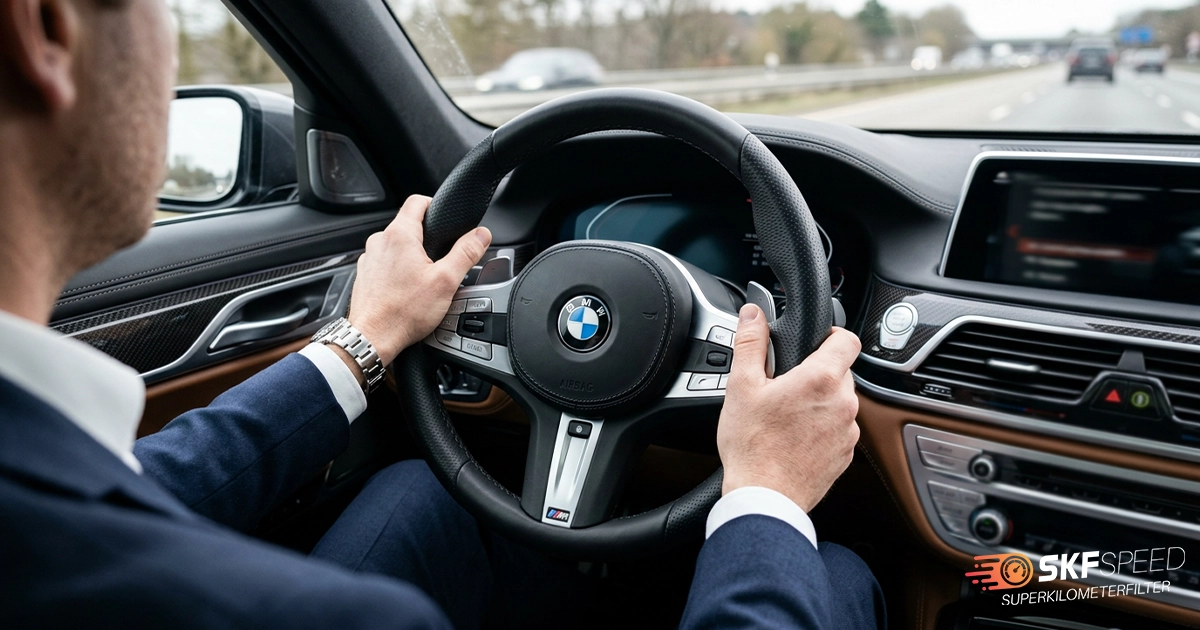
BMW mileage is one of the first things people check when they decide to buy a BMW. Vehicle mileage can tell you how much life the car may have left. However, the story isn’t that easy to predict. Miles alone don’t tell the full story about your automobile.
A well-maintained BMW with higher km can often be a better choice than a vehicle with lower miles but neglected. In this blog, we will discuss how mileage connects to a car’s lifespan, what numbers are considered good or average, and how to make correct decisions while buying, selling, or simply maintaining your automobile.
Is BMW Mileage important to consider?
How important is mileage in real life, and do we exaggerate its influence? Mileage is a crucial factor in determining vehicle condition and can also reveal many hidden details. However, when people talk about BMW mileage, they only look at the odometer and draw conclusions. It sounds simple, but the real value comes from understanding how that number can affect your vehicle’s life expectancy.
For instance, thanks to its perfect engineering, a BMW can last longer than many standard cars. With proper maintenance, they reach between 200,000 and 300,000 km. While some can even go beyond that, solely numbers don’t mean anything. You should always analyze mileage together with maintenance history.
What is good mileage for a BMW?
Everyone talks about mileage, but how can we transfer these talks into something measurable? What is a number that can be considered “good” mileage for a BMW car? Let’s see a general standard that can be a good start for orientation.
- Below 10,000 km per year is considered low.
- Around 15,000 km per year is considered average.
- Above 20,000 km per year is considered high.
To put these numbers into perspective, a five-year-old BMW with 75,000 km is within the average range. That is often a safe choice if service records also look clean.

Why is mileage alone not enough while buying a BMW?
You may choose low numbers and think lower mileage means better quality. That’s not always true. Actually, a car that sits unused for long periods can develop problems such as dried seals or battery issues. On the other hand, a vehicle that has been driven regularly and serviced on time can remain in excellent condition even with higher mileage. This is exactly where BMW mileage becomes more about context than just numbers.
How much mileage can a bmw last?
BMW mileage can go much further than many people expect when the car is properly maintained and driven with care. The actual lifespan depends on many factors, such as maintenance, driving style, and the specific model. Thus, it’s not just the number on the odometer. A BMW that receives regular service, quality parts, and smooth driving habits can last over 200,000 km. In simple terms, mileage gives a general expectation, but how you drive is what truly determines how long it will last.
BMW Mileage and Lifespan of Different Models
Not all BMW models age the same way. They are designed for different purposes and are meant for different roads as well. Additionally, engine type, driving style, and maintenance habits all play a huge role in how long the vehicle will last. Let’s discuss some examples.
1. Sedans and compact cars
BMW sedans like the 3 Series are famous for their balance between performance and durability. These cars often reach 250,000 km or more when owners follow regular service schedules.
2. SUVs and performance models
BMW SUV models, such as the X5 or X3, usually have higher wear due to weight and driving conditions. Despite these factors, many of these vehicles reach 200,000 km without major issues. As for the performance models, they require more frequent maintenance due to higher stress on the engine.
3. Hybrid and electric models
Hybrid and electric BMW vehicles have a different perspective on mileage. Battery health becomes just as important as km driven. Electric models often show less mechanical wear, but battery lifespan plays a big role in overall value.
What mileage do bmw start to break down?
BMW cars don’t break down suddenly at a specific mileage. On the contrary, the signs start to appear once a vehicle moves after 120,000 to 150,000 km. At this stage, overall wear becomes more noticeable and certain components reach the end of their natural life cycle. Within this mileage range, BMW owners often notice issues with the cooling system, suspension parts, and electronic sensors rather than major engine failure.
By 180,000-220,000 km, maintenance becomes more frequent, and small problems can add up if you ignore them. It helps to think of this phase more as a transition point rather than a failure point. A BMW will handle this range with predictable repairs if you service it on time. However, if you neglect one, it can cause a chain effect, and the whole vehicle gets broken down much earlier. The key is not the mileage itself, but whether the car has been prepared for it through proper maintenance.
Common problems with BMW mileage
These are the most common components in BMW that wear with mileage:
- Suspension parts such as control arms and bushings
- Cooling system, including water pump and radiator
- Transmission components in automatic cars
- Electronic display systems and sensors
These issues do not mean the car is unreliable. They simply show that every vehicle has parts that wear over time.
What are the signs that you need to pay attention as a BMW driver?
If you are evaluating a used BMW for sale, pay attention to these signs:
- Irregular engine sounds
- Delayed gear shifts
- Warning lights on the display
- Uneven tire wear
These signals can tell you more about the real condition than the odometer alone.
How BMW compares to other cars
Let’s look at a realistic comparison of lifespan based on average usage and proper maintenance.
- BMW vehicles usually last between 200,000 and 300,000 km.
- Toyota cars often reach 250,000 to 350,000 km with minimal issues.
- Mercedes vehicles typically fall in the 220,000 to 300,000 km range.
- Audi cars tend to last around 200,000 to 280,000 km.
At first, Toyota may seem like the winner. However, this does not mean BMW performs poorly. BMW just focuses more on performance and driving dynamics. That means parts may wear faster if the car is driven aggressively.
Why BMW can feel less durable
There are a few reasons why you might think that some BMW cars appear to have a shorter lifespan.
- More complex engineering compared to many economy vehicles.
- Higher-performance engines that experience more stress.
- Owners sometimes skip maintenance due to higher service costs.
This is where BMW mileage becomes misleading. It is not the number itself, but how the car reached that number.
Real-world perspective tells the story perfectly! If you have a well-maintained BMW with 180,000 km, it can easily outperform a poorly maintained economy car with 120,000 km. Longevity is not about brand alone. It’s about consistency in care. You must remember that a car’s life expectancy depends on several factors working together.
The Balance Between Mileage and Condition
The smartest approach for you would be to combine BMW mileage with other indicators.
- What experienced buyers look for
- Consistent service history
- Reasonable mileage for the car’s age
- Clean mechanical condition
- No major unresolved problems
Mileage works best if you look at it as a guideline, not a final decision maker.
Real scenario comparison between mileage and maintenance
When comparing two BMW cars, mileage alone doesn’t tell the full story. Imagine one vehicle with just 70,000 km but no service history, irregular oil changes, warning lights on the display, and visible wear inside and out. At first glance, it seems like a great deal because of the low mileage, but it actually carries a higher risk.
Now compare that to a BMW with 140,000 km that has full maintenance records, regular servicing done on time, a clean interior and exterior, and smooth engine performance. Even with higher km, this car often becomes the smarter investment because it has been properly maintained. The real difference between the two is not the mileage number, but the level of attention and maintenance each vehicle received over time.
How can Mileage Blocker help test bmw mileage?
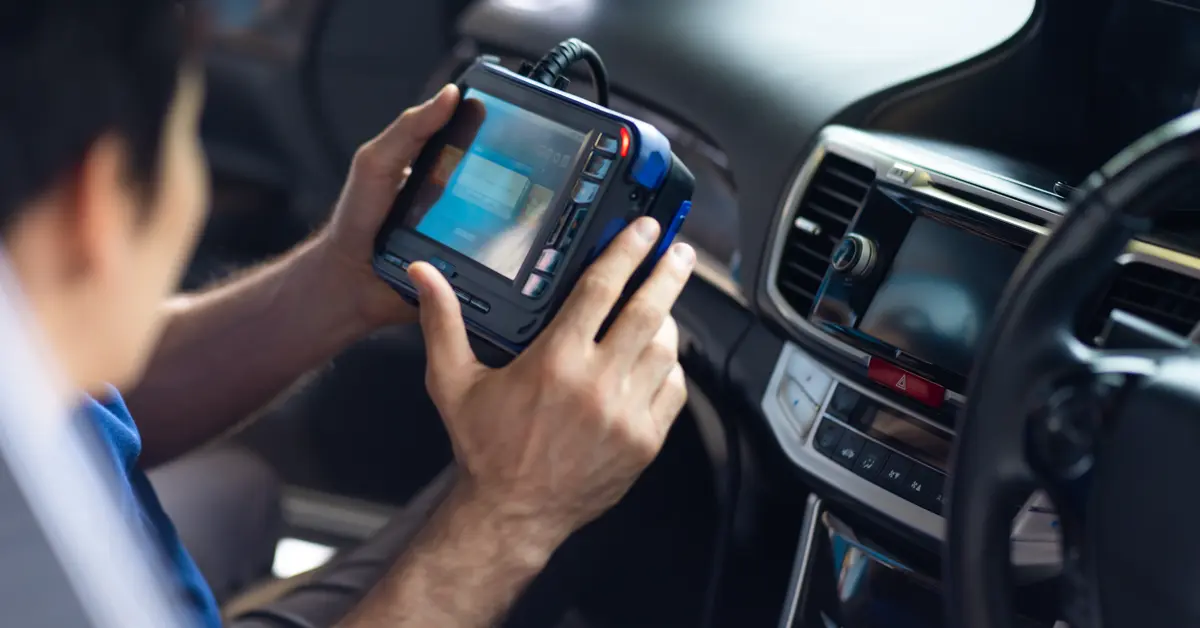
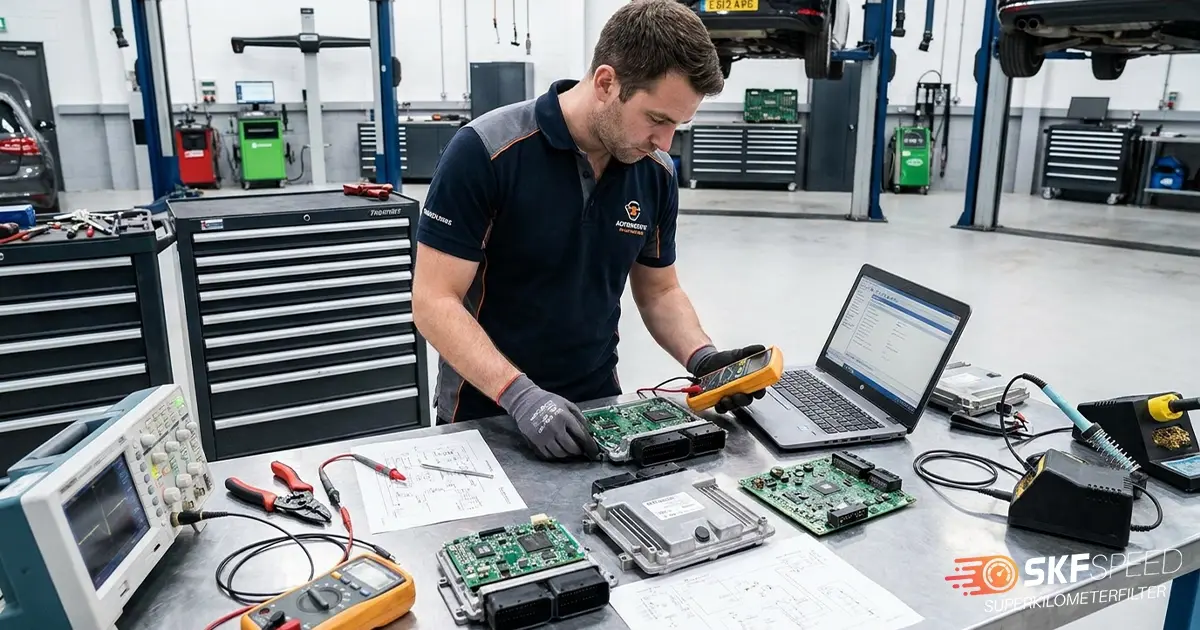
A Mileage blocker can be a useful tool for controlled testing when engineers or technicians want to evaluate how a BMW performs under certain environments. In test environments, it allows them to run diagnostics, monitor performance, and observe how different systems respond over time while keeping the displayed BMW mileage unchanged. This makes it easier to compare real-time vehicle behavior with the expected readings on the dashboard and identify inconsistencies in sensors, software, or electronic modules.
For example, testers can check if the speed, fuel consumption, or warning signals align with actual driving conditions. When used responsibly in a professional setting, this approach helps verify that the automobile functions correctly and that the systems connected to mileage data operate as intended.
What Are the Advantages of the Mileage Blocker?
A Mileage Blocker is a device that is distinguished by its unique features and unmatched efficiency. Its premium quality components enable flawless performance even in harsh weather conditions. The module has several functioning modes, and you can always choose the one that suits you the most.
Apart from these, the SKF mileage blocker comes with a mobile app and easy installation instructions to make the whole process even more comfortable. It’s essential to remember that Mileage Blocker must be used strictly for ethical purposes by professional testers. Using them on public roads or against any local laws is NOT acceptable. You can buy your module on the SKF website, and for any additional questions, please reach out to the customer support department.
Takeaway
BMW mileage plays a key role in understanding a car’s value, but it should always be considered along with maintenance, condition, and driving history. Mileage alone cannot determine lifespan or reliability. Buyers should always check official records, odometer consistency, and overall wear to understand the real quality of an automobile. Remember that correct decisions come from balance, not just numbers on the odometer.

By Maria Laskowski






Service center
CUSTOMER CENTER
Here you will find all the details about our company
Shipping and return
Here you will find shipping and return related information
Technical Support
Here you will find information on all technical questions
Installation Support
Here you will find helpful information about installation