Deutsch
  Русский
  Español
  Italiano
  Français
  Portuguese
  Türkçe
  Ελληνικά
  >
>
What does the odometer do that makes it still so important for your vehicle?
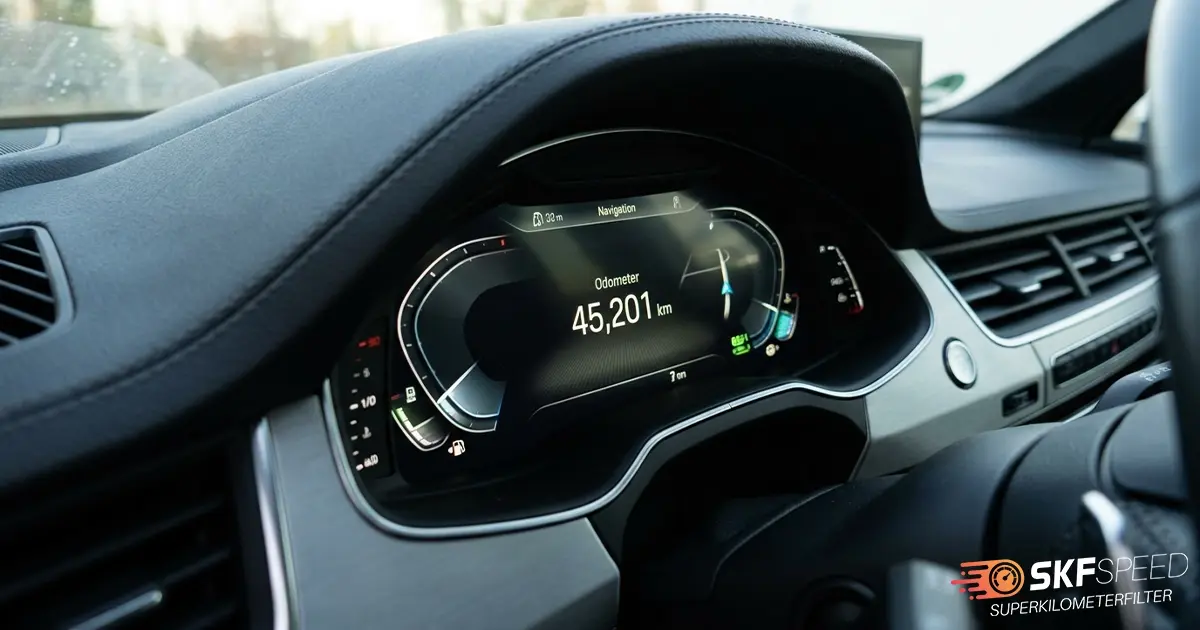
An odometer is an instrument that measures and displays how many miles or kilometers a vehicle has traveled. It sits right there on your dashboard, quietly tracking every mile your vehicle has ever traveled. Whether you drive a brand-new automobile or a used car, this small display can provide important information about mileage, maintenance schedules, and resale value. In order to have the full picture of the vehicle’s overall condition, you need to know how to use mileage data properly and what aspects require your attention.
In this blog, we will break down everything you need to know about this small but crucial instrument.
What is an odometer and how does it work in modern vehicles?
An odometer is a tool that counts all the miles you drive in your vehicle. But how does it do that? Back in the day, mechanical odometers worked using rotating gears connected to a transmission. Every rotation was equal to a fraction of a mile. Even though this method was stable, it was very easy to tamper with and manipulate the overall mileage.
To fix the existing issue, manufacturers changed the traditional method of mileage tracking. They invented digital odometers that work through sensors and vehicles’ ECUs. Every time you drive your automobile, the electronic dashboard displays the total mileage. Most importantly, it not only shows the information on the monitor but also stores all data in the ECUs.
How the mileage tracking process actually works
There are a few steps before you will see your traveled distance on the dashboard. The following are the general stages of how modern cars track mileage.
- The wheels start rotating while the vehicle moves.
- Automobile sensors count the wheel rotations.
- The onboard computer calculates how much distance you have traveled.
- The display updates the mileage reading, and the system shows it on a screen.
Vehicles no longer depend on mechanical gears for tracking miles. Digital odometers can calculate distance with impressive accuracy. Some systems may even work alongside GPS technology that increases precision even further. Hence, with these advanced methods, you have exact information about mileage and crucial data to plan your vehicle’s maintenance.
Is an odometer and a trip meter the same?
A lot of people confuse a trip meter with an odometer. It’s crucial to know the difference and when to use them. As we already discussed, the odometer is a tool built inside your car to tell you how many miles your car has traveled in total. As for the trip meter, it measures the distance between two locations that you select. Moreover, you can always reset the trip meter and measure the different distances. On the other hand, information that the odometer displays is permanent, and you cannot legally reset it.

Is odometer the same as mileage?
Because of many links to mileage, people literally think that odometers and miles are the same. The answer is almost yes, but not exactly. The odometer is the physical instrument or digital display in your car. As for mileage, it’s the number it shows. For comparison, the odometer measures mileage the same way a scale measures weight. One is the tool, the other is the reading. They are closely correlated, but they aren’t the same.
The confusion comes from the daily usage of these words. When we say “check the odometer,” we usually mean look at the mileage displayed on it. When someone says “the car has low mileage,” they mean the odometer reading is low. As you can see, in everyday conversation, people use the two words interchangeably, and that is totally fine. Just know that in technical contexts, there is a subtle distinction between them.
Why mileage matters that much?
We all know that mileage plays an important role in a car’s value, and it’s one of the first things that we always check. But do you really know why? Let’s figure it out together.
Mileage is more important than many people can imagine. It’s not just numbers that your vehicle records. It reveals the wear and tear of the vehicle, approximate maintenance costs, and possible inaccuracies. Therefore, whoever knows how to use mileage information can avoid costly payments for the future.
However, you should always remember that distance is just one side of the story. It’s not the only aspect that can affect an automobile. Road conditions, driving habits, car usage, following maintenance schedules, timely oil changes, and having proper tires, all can significantly change your automobile’s overall condition, regardless of mileage numbers. Hence, before you make the final decision based solely on the odometer reading, remember that there is always the other side of the story you need to check first.
Is there good and bad mileage?
Yes, we can determine the logical mileage limit that will be the optimal number for a car based on its age. According to Carfax and other statistics, a person travels around 13,000 miles a year. Based on this information, we can have general expectations about miles if we know a car’s age.
Now, let’s discuss what good and bad mileage is, or as it’s more commonly known, how much is low and high mileage.
- Low mileage is considered when you drive up to 10,000 miles a year. It means that your car isn’t overused, and if you follow the maintenance according to guidelines, it must be in perfect condition.
- Normal mileage is between 10,000 and 15,000 miles a year. This margin is generally accepted as normal numbers, and as we don’t always use vehicles perfectly, mostly car’s are expected to be within this range.
- If a car has more than 20,000 miles, you should think that it has too much on its record. Even if a person follows all the maintenance routines, wear and tear on the vehicle must already be significant.
Before you think that now you know everything about mileage, let me reveal one secret to you. People may think that if the distance is so important, it’s best to have as little as possible. Not really! If you drive less than 5,000 miles a year, you may damage your car because of underusing it. Vehicles are not souvenirs to sit in your garage. They love to be on the road. Underusage damages their parts and, over time, will cause costly repairs. Thus, enjoy driving your car within normal limits, follow maintenance recommendations, and you will have your lovely automobile in great condition for a long time.
What is the 30 60 90 rule for cars?
The 30 60 90 rule for cars refers to major maintenance milestones. They indicate routine maintenance checks at 30,000, 60,000, and 90,000 miles. Here is what you should do when you reach each milestone.
- At 30,000 miles, you should do an oil service, air filter replacement, tire inspection, and brake check.
- At 60,000 miles, many vehicles require transmission service, coolant replacement, spark plug inspection, and belt checks.
- At 90,000 miles, you should be ready to perform timing component inspections, major engine maintenance, suspension checks, and comprehensive system inspections.
These are general recommendations when you must undergo a certain check-up. However, if you suspect that any of your vehicle part not working properly, of course, you must inspect regardless of the mileage. Thus, have the 30, 60, 90 rule in mind, but if your car needs maintenance before that, don’t postpone it.
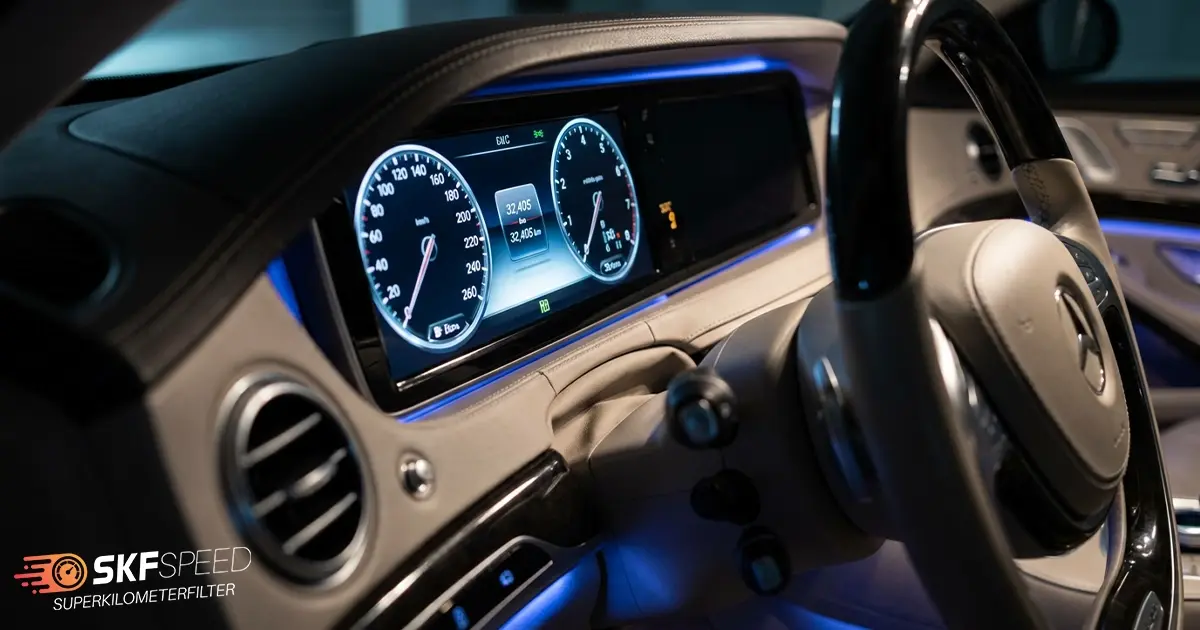
How to switch odometer from km to miles?
Many modern vehicles allow drivers to switch between kilometers and miles with ease. The exact process depends on the manufacturer, but it usually follows these steps:
Step 1: Open vehicle settings on the dashboard display.
Step 2: Locate units or measurement settings.
Step 3: Select “miles” instead of “kilometers”.
Step 4: Confirm the change.
Another method can also help you switch from km to miles.
Step 1: First, turn the ignition to the “on” position without starting the engine.
Step 2: Locate the trip meter reset button. It’s usually a small knob or button near the instrument cluster.
Step 3: Hold the reset button down for five to ten seconds while the ignition is on.
Step 4: The display should toggle between kilometers and miles.
If these options don’t work, check the owner’s manual for your specific automobile.
Also, some vehicles, particularly European imports, store the units in the ECU or the instrument cluster module. In such cases, just toggling the button won’t work. You will need a diagnostic tool to access the settings menu. Many dealers will do this absolutely for free or for a small fee. If you have a diagnostic tool, you will probably be able to handle it without professional help.
How to check whether an odometer reading is accurate
Unfortunately, not everyone uses cars properly, and you can’t trust everyone who shows the odometer. There are many devices that manipulate odometers. They can roll back, reset, or erase a certain amount from the dashboard. Professionals can identify such discrepancies, but for an ordinary customer, buying such a vehicle can become a huge problem and a costly decision. I’ll help you avoid such problems.
As soon as you check the mileage on the dashboard, try to analyze the following aspects:
Service records
Does the mileage on the dashboard correspond with the service records? If you notice that those numbers in the service records and on the instrument cluster have a mismatch, don’t buy that vehicle. Most likely, the automobile has been tampered with and shows misleading information.
History reports
Check the vehicle history reports. Comparing the history reports with the actual odometer readings can reveal any inaccuracies over time.
Inspection documents
Don’t forget to compare the information with inspection documents. When going through the documents, make sure that you analyze those documents as well. It may sound lots of paperwork and reading, but small details will save you from making the worst decision.
Tires
Once you finish checking the documents, it’s time to look at the car’s tire wear. Tires often reveal how it has been used, what damage it received, and whether it has been driven on bad terrain.
Interior
Your final inspection will be on the interior condition. If everything is correct, the information on the documents must be appropriate to the vehicle’s condition. If paddles, seats, leathers, or materials are worn out despite having low mileage, it’s suspicious and can be a big red flag.
What is mileage blocker for?
A Mileage blocker is a smart device that connects to your dashboard and helps car testers stop mileage recording while they’re testing your car. It helps them prevent accumulating unnecessary mileage as the car isn’t driving on the road. Also, imagine if you take a car for testing or tuning and you bring it from there with increased mileage, even without driving any miles on a road.
Mileage blocker is the best solution because it doesn’t leave any trace, and no diagnostic tool can detect it. However, remember that these smart devices are strictly for only car testing and tuning. Only professional mechanics should deploy it in a controlled environment, and it mustn’t be used on free roads. Therefore, you have to follow local laws and regulations.
This device is perfect because it combines all the features you may need:
- Untraceable effect.
- Different modes to choose from.
- Mobile app for easy control.
- Premium quality materials.
- Working in harsh weather.
- DIY installation instructions.
If you want to buy the mileage blocker online, you can visit the SKF website. For any additional information, please visit our support section or contact the customer service department.
Takeaway
An odometer is an instrument that tells you how much mileage your car has covered. It helps you schedule maintenance, access the vehicle’s overall conditions, and detect manipulations. Whether you want to verify the history, track mileage, or switch displays, the core principle remains the same.

By Maria Laskowski






Service center
CUSTOMER CENTER
Here you will find all the details about our company
Shipping and return
Here you will find shipping and return related information
Technical Support
Here you will find information on all technical questions
Installation Support
Here you will find helpful information about installation